Explore the Full Spectrum of Leadership and Life Mastery
Issue #153 What if the Thing You’re Fighting to Save is the Thing You Need to Leave?
Brad Pedersen
October 22, 2026
•
12 min read
Sometimes the hardest thing to let go of is something we’ve spent our lives proving we could get.
Last week, I wrote about what happened after I was fired from the company I had spent nearly three decades building. I shared how losing my career forced me to examine the story I had been telling myself about who I was, and how easily the things we do can become the things we believe define us. If you want to catch up, you can do so HERE.
But as I’ve continued to reflect on that morning, I’ve come to recognize another emotion that was present alongside the shock, disbelief, embarrassment and sense of betrayal.
An emotion I haven’t talked much about.
Relief.
It’s an uncomfortable thing to admit because it seems almost contradictory. How could I feel relieved about losing something I had spent so much of my adult life creating?
To understand that, I have to go back much further than the breakfast where I was fired.
I have to go back to being a short kid in a family of giants.
My father was tall. His brothers were tall. My cousins were tall. And although I doubt anyone intended it, being noticeably shorter left me feeling that I somehow had something to make up for.
Ours was also a family where achievement mattered. There was an expectation that you would make something of yourself, and I interpreted that expectation through the insecurity I already carried.
If I couldn’t measure up physically, perhaps I could distinguish myself in other ways.
So I learned to work harder, push longer and persevere when things became difficult. I developed an almost relentless determination to prove that I belonged.
That drive helped me take a curiosity about a flying toy and turn it into a business that eventually became one of Canada’s largest toy distribution companies. I loved much of what we created. The toy industry rewarded curiosity and imagination, and there was something magical about turning an idea into a product that could capture the imagination of children around the world.
But the business was also serving another purpose.
Every milestone, every new customer and every year of growth provided another piece of evidence that I was capable, accomplished and worthy.
Without recognizing it, I had built a business that was helping me answer a question I’d been carrying since childhood.
Was I enough?
And that is where things became complicated.
When Survival Becomes Your Purpose
In 2006, the business I had spent years building came crashing down.
We called it a restructuring, which is a much more palatable way of describing bankruptcy. Whatever language we used, the company was in serious trouble, and I felt personally responsible.
For the next two years, I did everything I could think of to save it.
Earlier in my career, I seemed to have an intuitive ability to recognize opportunities, make decisions and grow the business. There had been times when it felt almost effortless.
Now, everything I touched seemed to go wrong.
I remember feeling as though I was swimming upstream against a current that kept getting stronger. Problems multiplied faster than I could solve them. Eventually, I began to wonder whether I was somehow cursed.
There were mornings when I didn’t even want to go into the office. I believed my decisions had created the mess we were in, and I couldn’t see a way to stop things from unravelling.
The financial pressure was enormous, but the emotional burden was worse. I owed money to people who had trusted me, including friends and family who had invested seven figures into the business.
By 2008, I began to see a possible way forward. We evolved the business, found some early traction and eventually began growing again.
Looking back, I wish I could say that reinvention was driven by an exciting new vision of what might be possible. There was certainly some inspiration, but if I’m being truthful, there was far more desperation and perspiration. I wasn’t pursuing some grand calling; rather, I was trying to dig myself out of a very deep hole.
Fortunately, we found momentum, generated profitable growth and, over the next five years, gradually repaired much of the financial damage. I was able to repay debts and begin putting one of the most difficult periods of my life behind me.
From the outside, it probably looked like a remarkable entrepreneurial comeback.
And in many ways, it was.
But something was missing.
As the financial pressure lifted, I began to recognize that the motivation which had sustained me was also disappearing. I had spent so long trying to escape the pain of failure that I hadn’t considered what I wanted my life to look like once the pain was gone.
I still attended the trade events, met with customers and participated in the industry, but the excitement I had once felt was no longer there. The toy business had given me an extraordinary career, yet increasingly, I struggled to find a deeper sense of meaning in what I was doing.
I was learning that getting out of pain isn’t the same as finding purpose.
I wonder how many of us discover that distinction only after we’ve accomplished the thing we believed would finally make us happy.
We spend years pursuing a particular outcome, convinced that once we reach it, life will somehow feel different. The goal becomes so consuming that we rarely consider what happens when we finally arrive.
In my case, I had spent years trying to get back to zero. Once I got there, I discovered that zero wasn’t necessarily where I wanted to stay.
I had solved the problem that had been consuming my life and yes I wanted to move past it, however I just hadn’t figured out what I wanted my life to be about.
The Courage to Let Go
After several years of profitable growth, we eventually began exploring options to exit the business.
A merger appeared to offer the best path forward. It seemed like an opportunity to combine what we had built with a larger organization, create something stronger that eventually would at the same time provide some liquidity.
As I’ve shared in the previous newsletters, that merger ultimately led to my firing, and that firing resulted in my exit.
It wasn’t the exit I had imagined. But looking back, I can better understand why relief was mixed in with the shock, embarrassment and betrayal.
In a strange and unexpected way, I had finally been released from something I had been trying to find my way out of for years. Perhaps the most uncomfortable realization was that I might never have given myself permission to leave had someone else not made the decision for me.
I had spent much of my life developing the ability to persevere. That determination had served me extraordinarily well, but perseverance becomes complicated when the thing we’re fighting to preserve is no longer the thing we would freely choose.
I don’t want to oversimplify this as I know I had genuine responsibilities. People had trusted me with their money, employees depended on the business, and I had made commitments I felt morally obligated to honour.
I am grateful that I had the opportunity to start a new company that would allow me to repay the debts. Those decisions reflected values that remain important to me, however somewhere along the way, the reasons I was staying had changed.
At first, I stayed because I loved what I was building and it gave me a place to prove my worth. Later, I stayed because I felt responsible for what had gone wrong. Eventually, even after much of that responsibility had been fulfilled, I continued because I had spent so many years being the person who never gave up.
I had become attached not only to the business, but to the identity of someone who could always find a way through.
How do you know when perseverance has transformed into a stubborn inability to let go?
For an entrepreneur, that’s an uncomfortable question. We’re taught to admire grit, determination and resilience, and for good reason. Almost anything worthwhile requires perseverance.
But sometimes the courageous thing is to keep going, while other times it may be to recognize that a season has run its course.
The difficulty is knowing the difference. I certainly didn’t. Or perhaps, more accurately, I wasn’t yet willing to act on what I was beginning to recognize.
The firing made that decision for me.
For the first time in decades, I was free to consider what I wanted to build without first asking what I needed to save.
What We Carry Into the Next Season
One of the things I’ve come to appreciate about reinvention is that we don’t begin again as the person we were when the previous chapter started. We carry the experiences of that chapter with us.
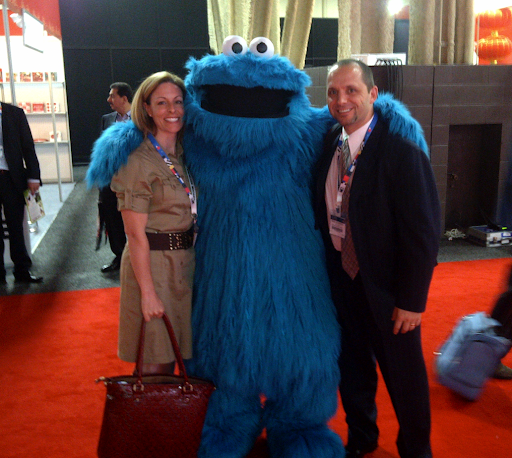
The toy business had taught me to recognize opportunities, create products, build teams, navigate uncertainty and bring ideas to life. Along the way, I experienced both the excitement of success and the humiliation of failure. The photo above was taken during a visit to one of our factories, at a time when we were still working our way out of the difficult situation we had created. Looking at it now reminds me that some of the most valuable lessons I carried into the next season of my life came from the experiences I would never have chosen to go through.
Those experiences didn’t disappear when my career ended. What disappeared was the assumption that they could only be expressed through the business I had spent so long building.
As I began considering what might come next, I found myself returning to interests and convictions that had been present throughout my life but hadn’t always found expression in my work.
I had always been drawn to creating things, bringing people together and building communities where people could connect, learn and grow. I had also long carried a concern about the environmental consequences of the things we consume and discard.
From as early as I can recall, I remember pulling recyclable materials out of the garbage at home because I couldn’t stand the thought of something useful ending up in a landfill. There was an uncomfortable tension between that conviction and an industry built largely around manufacturing and distributing more products.
Once I was no longer consumed by preserving the business, I had the opportunity to pay closer attention to that tension.
Over time, those interests and convictions helped lead me into very different ventures, including Pela and Lomi, where I could apply what I’d learned about making products and building businesses in ways more aligned with my values.
Other threads found expression through the experiences and communities I began creating around activities I loved, and ultimately through Full Spectrum.
On the surface, these pursuits might appear quite different. But beneath them I recognize many of the same qualities, finding expression in new ways: curiosity, creativity, entrepreneurship, connection and a desire to make a meaningful contribution.
While my careers have changed, my understanding of my calling has continued to evolve.
I used to think of reinvention primarily as changing what you do. Now I believe the more meaningful work is understanding what has consistently been true about who we are and how our time, talent and resources might better reflect who we’re becoming.
Every season changes us. We learn new things, reconsider old beliefs and discover capabilities we didn’t know we possessed. But we don’t start from scratch. We carry forward what previous seasons have taught us, including a clearer understanding of what we no longer want.
When I think about the morning I was fired, I no longer see it simply as the day I lost my career. I see it as the day a chapter I had struggled to close was unexpectedly closed for me.
The shock, embarrassment and betrayal were real.
But so was the relief.
Perhaps that relief was telling me something I hadn’t been willing to hear. I had spent years proving that I could persevere, rebuild and survive. Now I had an opportunity to discover what I might create if I was no longer motivated primarily by the need to prove myself or escape a difficult situation.
What might happen if I began making decisions based less on what I was afraid of losing and more on what I believed was worth contributing?
One Question
If any of this sounds like I’ve somehow figured it all out, I can assure you I haven’t. I’m still wrestling with many of these questions, and perhaps that’s the point.
I’m beginning to understand that reinvention isn’t a single decision or some destination we eventually reach. It’s an ongoing process of examining whether the lives we’re building still reflect the people we’re becoming. Sometimes that means finding the courage to persevere, other times it means finding the courage to let go. And occasionally, as I’ve experienced, life makes that decision for us.
One of the harder lessons I’ve had to learn is that not every difficult transition comes from failure. Sometimes it comes from recognizing that something which once gave our lives meaning no longer does. And admitting that can be particularly uncomfortable when we’ve invested so much of ourselves in making it work.
I still believe resilience is one of the most valuable qualities we can develop. But I’m learning that perseverance should serve a purpose; it shouldn’t become the purpose itself.
It took me years of struggle and an unexpected breakfast to begin understanding that distinction. My hope is that you won’t need the same kind of disruption to recognize it in your own life.
So there’s one question I’d invite you to sit with this week:
What are you holding on to because of who you’ve been, rather than who you’re becoming and who you eventually want to become?
New here?
Discover Where You're Thriving and Ready to Grow


Subscribe to Full Spectrum Newsletter
Get insights delivered to your inbox monthly.
Subscribe to Full Spectrum Newsletter
Get insights delivered to your inbox monthly.
