Explore the Full Spectrum of Leadership and Life Mastery
Issue #140 Why Your Teenager Doesn't Want Your Advice
Brad Pedersen
July 23, 2026
•
10 min read
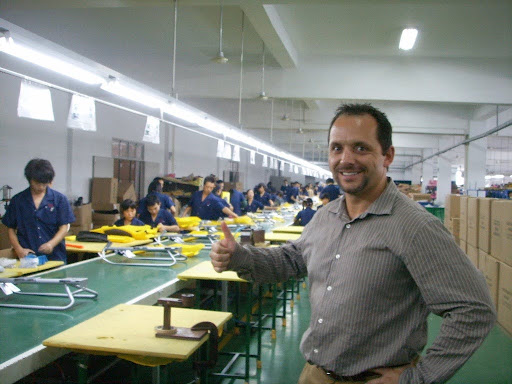
The picture above was taken in a toy factory in rural China. My daughter is sitting on an assembly line while my son stands beside the factory owner waiting for his turn. Both of them had the opportunity to work in the factory that day, and the lessons they learned from the experience were priceless.
Over the past few weeks, we have been exploring the four stages of parenting and how each stage asks us to show up as parents differently. You can read more about the framework HERE.
In the last issue, I wrote about the Teacher years, ages five to twelve, when the focus shifts from protecting toward building responsibility. Today, I want to explore the third stage: the Coach years, ages twelve to eighteen. This is the season when our focus shifts towards building wisdom, character, and identity.
Seeing the World Behind the Things We Buy
For much of my career as a toy maker, I spent a significant amount of time in Asia, particularly China.
For several decades, China has been the manufacturing hub of the world. The infrastructure, supply chains, expertise, and human resources required to manufacture products at scale exist in a way few other places can match.
The first time you visit a factory in China, there is a sense of awe at the scale and coordination required; however there is also a sense of unease.
Growing up in North America, I had pictured manufacturing as something similar to an automobile assembly plant. Something that we would often see in the news, with robotic arms doing most of the work and a handful of employees helping products move down the line. My assumption growing up was that machines assembled most of the things we use every day.
When you visit a factory, you quickly discover how far that assumption is from reality.
Most of the products that we use each day are assembled by hand. Massive buildings are filled with long assembly lines made up of thousands of people, all working together to meet demanding timelines and exacting quality standards.
For the people on those lines, that often means long hours of repetitive work.
Coming from a culture accustomed to five-day work weeks, eight-hour days (with plenty of breaks for coffee and lunch), to witness this for the very first time is a shock. It is humbling to see how many people perform this kind of work and how grateful most of them are for the opportunity to do so.
In the communities they come from, these factory positions are considered good, hard-won jobs. However they are also jobs that most people in North America would never consider doing.
Experiencing Compassion
Several years ago, my wife and I took the time to establish a set of family values and virtues. They described where we wanted to invest our time and attention, as well as the kind of attitude and attributes in how we lived our lives.
One of those virtues is to live with compassion. We believe that we have been blessed with much. That those blessings come with a responsibility to use our resources as a force for good to benefit the lives of others.
I still remember the first time I travelled to a developing country. I was in my late teens, and it was shocking to have the first hand experience to witness the conditions in which so many people in the world live.
Growing up in Canada, I had been insulated. While I had some awareness that there was a world where food, clean water and shelter were a privilege; I thought it was the rare exception. Without ever consciously deciding it, I assumed the life I knew as a kid was simply the way most life was lived around the planet.
However through that lived experience I discovered that I was wrong and that forever changed me. I have since come to understand that there are few things more grounding than an experience that confronts your assumptions and forces you to see the world from an entirely different perspective.
I knew what that trip had done for me, and I wanted to create a similar opportunity for my own children to grow their awareness.
Taking Them There
On one of our many trips to Asia, my wife and I arranged for our kids to join us.
We began in Hong Kong, a modern, metropolitan, almost futuristic city filled with energy, technology, and luxury. After giving them a few days to acclimatize, I arranged for our family to visit one of our factories, where I had arranged a special opportunity for our kids.
At the time, travelling from Hong Kong into rural China created an immediate culture shock. In the space of a few hours, the surroundings changed dramatically. The differences were visible in the level of congestion, pollution, infrastructure, and overall poorer quality of life.
When we arrived at the factory, we met the owner and began our tour.
Partway through, I looked over at him and gave him a nod. He walked to one of the assembly lines and opened a place for our kids.
They sat down on wooden stools and were shown by the assembly line manager how to perform a job that was part of the manufacturing process. One of my kids painted parts while the other placed screws into the toys after which they would then send them down the line.
I watched with some amusement as their inexperience began slowing everyone else on the line down. There was a noticeable tension from the other workers who were being affected by their inefficiency. However they were polite and simply showed restraint and patience.
But beneath the humour was something much more meaningful. My kids were seeing firsthand the work required to produce the products that they had only ever seen in a final package. They had been unaware of an important part of the process that most of us take for granted, in producing a final product.
After spending several minutes on the line, they were finally dismissed (to the relief of the other workers) and we continued the tour; the kids had a chance to see the dormitories where the workers lived.
Keep in mind few of the workers were local. Most had travelled from northern China after securing what they considered to be an aspirational job. In their role, they worked long hours and sent much of what they earned home to support their families.
The dormitories were humbling. Rows of bunk beds filled each room, with several workers sharing a congested space. Instead of mattresses, each bed consisted of a sheet of plywood covered only by a few blankets. In addition there was a single shared bathroom consisting of a hole in the floor and a bucket of water.
While that may sound inhumane, the reality is it is the accepted standard. This was not a poorly run factory. In fact at that time it had achieved the highest accreditations available; which was required to be a toymaker. Yet by North American standards, the living conditions would have been considered completely unacceptable.
As we left the factory, I could see the experience had humbled both of our kids. Working on the assembly line had been novel for a few minutes, but after seeing the workers' living conditions, they were deeply grateful they were only visitors and not the people returning to those same stools day after day.
As meaningful as that experience was, what happened next was even more impactful.
What Happened at the Border
As we made our way back toward Hong Kong, we were met at the border crossing by a number of panhandlers, of which many were children.
My wife and I gave our kids some money to hand out.
They gave away everything we had given them and then returned back to us with tears in their eyes, asking for more.
We gave what we could, but it was clear there was more need than we had ability to meet. The ride back to Hong Kong was quiet.
The following morning, over breakfast, we asked what they had taken away from their visit to China, the factory and the overall experience.
They talked about being amazed by how our toys were made, the coordination required to run a factory of that size, and how humbled they felt after seeing the way the workers both worked and lived.
But what struck me most was hearing them talk about the children at the border. Seeing that much need, and realizing they could not possibly meet all of it, broke their hearts.
In that moment, compassion stopped being something we talked about as a family and became something they had experienced for themselves.
It was exactly the lesson my wife and I had hoped would land.
Why the Coach Years Matter
Until your children are around twelve years old, you are the most important and influential person in their life.
During those years you have served two primary roles. First, you were their protector, creating the safety and security that every child needs to flourish. Then you became their teacher, helping them develop responsibility, discipline, values, and the habits that shape character.
After twelve, their circle of influence begins to widen. Friends, teachers, coaches, social media, and culture all begin competing for their attention and shaping how they see the world. And that is also the time they begin to question you.
That is when your role has to change.
The Coach years are about helping your children think, discern, and develop character and awareness. As part of that, it is also the season when you begin allowing them to experience the natural consequences of their choices instead of rescuing them from every uncomfortable outcome. That is how true knowledge from learning is developed, that is how character is strengthened and that is how identity becomes firmly rooted.
During these years, we learn to correct a little less and connect a little more. We are still fully invested, but we are increasingly standing on the sideline rather than running out onto the field.
There can be a temptation during these years to become your child's friend.
The truth is that they already have friends. What they really need is a parent who is willing to show up as a coach.
A good coach does not play the game for our kids. They cannot make every decision, prevent every mistake, or protect from every loss. Instead, they remain in their kids corner, offering perspective, asking difficult questions, and helping them learn from what they experience.
That is the best way for a coaching parent to show up for their kids, and if we serve this role well and do it right we will then earn the right in the next stage to become friends.
It was with this understanding of our role to be coaches, that my wife and I made what, at first glance, seemed like an unusual parenting decision. We took our children into a factory in rural China in an effort to have them experience the “why” behind the values and virtues that we were trying to embody, not merely hear us talk about them.
It would have been much easier to sit them down, telling them to be grateful, kind and compassionate. That conversation would have taken an afternoon instead of a trip halfway around the world.
But there is a profound difference between “explaining it” and giving a child the opportunity to “experience it.”
During the Coach years, experience becomes one of our greatest teachers. It helps our children understand not just what matters in life, but why it matters in the first place.
What I'd Tell a Younger Version of Myself
If I could go back and coach myself through those years again, I would spend less time trying to teach lessons and more time creating experiences. The Coach years are the season when more is caught than taught.
It is a time when children are beginning to question everything. They don't simply accept what we tell them because we're their parents. They watch us, they test our convictions and they notice whether our actions line up with our words.
That means our role begins to change.
We stop offering answers and start leading with questions.
We stop correcting every behavior and start looking for opportunities to connect.
We become more interested than interesting.
Instead of telling them what to think, we help them learn how to think.
Instead of rescuing them from every mistake, we allow them to wrestle with the consequences for the actions they take. However we do so while reminding them they never have to wrestle alone.
Looking back, I don't think our trip to China stayed with our kids because of anything my wife or I said. It stayed with them because they experienced something they could never have learned from a conversation around our dinner table.
They witnessed the dignity of hard work. They discovered that gratitude often grows when our assumptions about the world are challenged. And they experienced compassion rather than simply hearing us talk about it.
Those lessons have remained with them because they were discovered, not delivered. They have since become part of how our children see the world and they influence the choices they now make.
That, to me, is the essence of the Coach years. The greatest lessons are rarely taught. They are caught through the experiences we create, the questions we ask, and the lives we model for our children.
What I Want to Leave You With
So this week, as you ponder how you are showing up as a parent of teenagers, I'd encourage you to reflect on a few questions.
Are you spending more time giving your kids answers, or asking questions that help them discover truth for themselves?
Where are you still correcting when what they really need is connection?
What experience could you create over the next year that could shape how your kids choose to live their lives?
Because in the Coach years, the greatest lessons aren't taught. They're lived.
If this resonated with you, I'd encourage you to share it with another parent who has teenagers and is in the Coaching stage of parenting.
New here?
Discover Where You're Thriving and Ready to Grow

Subscribe to Full Spectrum Newsletter
Get insights delivered to your inbox monthly.

Subscribe to Full Spectrum Newsletter
Get insights delivered to your inbox monthly.