Explore the Full Spectrum of Leadership and Life Mastery
Two Scoreboards - What I Had to Unlearn About Success
Brad Pedersen
October 30, 2026
•
10 min read
Do you remember the first time you felt truly free?
That first experience of having both freedom and the ability to decide what to do with it. When the world suddenly seemed bigger, the possibilities felt endless and you began to recognize that you could choose where you wanted to go.
For many of us, that moment arrived somewhere around the end of high school. After twelve years of following schedules, attending classes and being told where we needed to be, we were finally emerging from a system that had structured much of our lives. Around that same time, many of us experienced another milestone that seemed to change everything: getting our driver’s licence and access to our first vehicle. Suddenly, we could drive to a friend’s house, head out on a spontaneous road trip or simply get behind the wheel with no particular destination in mind.
There was something intoxicating about that combination of independence and possibility. We were young enough to believe almost anything was possible, yet old enough to begin making some of those possibilities happen.
I remember that feeling vividly. I was 19 years old, driving my GMC Tracker with my buddy Dean as we made our way from the Prairies of Alberta into the Kootenay mountains of British Columbia. It was Easter break, and we were heading to Whitewater to spend a few days skiing and hanging out with my Uncle Neil. With the open road ahead of us and the anticipation of time in the mountains, I remember feeling that wonderful combination of independence, adventure and possibility.
The funny thing is that I couldn’t tell you how much money I had in my bank account that day, although I suspect it wasn’t very much. I certainly didn’t have an impressive net worth, a successful business or any of the financial metrics I would later spend decades pursuing. But I remember how I felt. I was completely free, sharing an adventure with a good friend, with the mountains ahead of us and a few days of skiing to look forward to.
Looking back, I wonder whether I understood something about wealth at 19 that I would spend much of the next three decades forgetting. Because somewhere along the way, I started measuring my life against a very different scoreboard.
The Scoreboard We Learn to Keep
I’ve been thinking about the contradiction in that memory. How is it that at 19, with very little money and almost nothing in the way of financial assets, I could feel so extraordinarily wealthy?
The more I reflect on that experience, the more I’ve come to believe that wealth is as much a feeling as it is a financial number. That ski trip remains such a vivid memory because I had the freedom to explore, a good friend to share the adventure with and the sense that an entire world of possibilities was opening up in front of me. By almost any financial measure, I had very little. Yet in that moment, I felt like I had everything I needed.
I suspect many of us can relate. When we’re young, we tend to measure the richness of our lives through friendships, experiences, adventure and possibility. We don’t necessarily wait until we’ve achieved some future milestone before allowing ourselves to enjoy life. We find ways to experience it with whatever resources we have.
Then, as we get older, life becomes more complicated. We pursue careers, build businesses, buy homes and start families. These are wonderful and meaningful developments, but they also introduce responsibilities and obligations. We need to earn a living, provide for the people who depend on us and create some measure of financial security. Money becomes increasingly important, and for good reason.
But somewhere along the way, the way we measure our progress begins to change. We start associating wealth less with how we’re experiencing our lives and more with how much we’re accumulating. Income, investments, bank balances and net worth become the markers of success.
There’s a strange paradox in this. We can spend much of our adult lives pursuing the financial freedom to experience something we once enjoyed with very little money. What once felt available to us in the present becomes something we attach conditions to. We begin to believe that the freedom we want is waiting somewhere on the other side of a financial milestone.
I certainly fell into that way of thinking. For much of my entrepreneurial career, I measured success through revenue, profitability, net worth and the next deal. Those metrics helped me build businesses and meet obligations, but gradually they began to represent more than financial performance. They became a way of measuring my own success and, if I’m being truthful, my sense of worth.
For years, I rarely questioned whether the numbers I was chasing were measuring the things that mattered most to me.
Then something happened that gave me an opportunity to put that belief to the test.
The Other Side of Enough
When I first started in business, my goal was to grow the company. My first big target was $1 million in revenue, which we eventually achieved. But rather than feeling satisfied, I found myself wanting more. So I set a new target of $5 million, then $10 million, $25 million, $50 million and eventually $100 million.
Through sheer force of will, we found ways to grow the business and reach each of those milestones. All the while, I carried the belief that somewhere on the other side of those numbers, I would finally feel like I’d arrived. Yet each time we reached a new target, the satisfaction faded surprisingly quickly, and before long, I was chasing the next one.
Eventually, I set an even bigger goal: I wanted to achieve an exit.
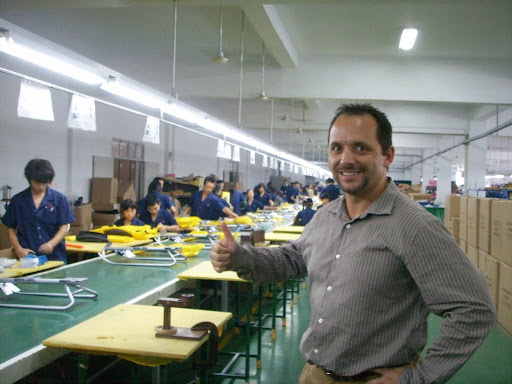
That opportunity came in 2017 when we merged our toy company with another business. Outside financing provided the liquidity I’d been hoping for, and when the transaction was complete, I watched my personal bank account increase by eight figures.
I remember the excitement, disbelief and enormous sense of relief. After years of taking risks, navigating setbacks and carrying financial responsibilities, I had achieved something that once seemed almost unimaginable. By the financial scoreboard I’d been using for most of my adult life, I’d finally arrived.
And for a brief period, it felt exactly the way I thought it would.
But within a few days, the excitement began to fade. The numbers in my bank account hadn’t changed, but the feeling I had expected them to create was already slipping away. I had imagined this milestone would bring lasting satisfaction, security and personal accomplishment. Instead, I found myself wondering what came next.
If reaching a number I once believed would be enough didn’t make me feel wealthy in the way I’d imagined, what exactly had I been pursuing?
I don’t want to sound ungrateful or diminish the significance of achieving financial success. I’ve experienced firsthand what happens when there isn’t enough money. I’ve known the anxiety of owing people money, the embarrassment of financial failure and the pressure of trying to meet obligations when the resources simply aren’t there. Financial security matters. It reduces stress, provides choices and creates opportunities that might otherwise be unavailable.
But I’d made the mistake of assuming that because having more money would improve my life when I didn’t have enough, accumulating ever-increasing amounts would continue to produce the same emotional return.
The liquidity event challenged that belief. I’d achieved an extraordinary result on my financial scoreboard, yet the satisfaction was remarkably short-lived. Looking back, I can see that I’d been using money and status to validate my own success and worth. Whenever the feeling of accomplishment faded, my default response was to pursue another milestone, another opportunity or another achievement.
“More” and “next” had become my default answers to questions about finding satisfaction and meaning.
It was my version of the Wizard of Oz. I’d spent years travelling toward a destination, convinced that everything would feel different once I arrived. But when I finally got there, I discovered that the destination couldn’t deliver what I hoped or expected.
And as a result that finish line kept moving because I was trying to achieve a feeling through a financial metric.
Back to Basics
That realization brought me back to something I seemed to understand instinctively at 19. Financial wealth is a number, but experiencing wealth is a feeling. Money can create the conditions for a rich and meaningful life, but it can’t guarantee that we’ll actually experience one.
I’ve come to see that money itself is neither good nor bad. It’s neutral. Its value comes from what we choose to do with it. We can use it to provide for our families, build businesses, pursue experiences, support causes we believe in or create greater freedom over how we spend our time. But when we confuse money with wealth, we risk spending our lives accumulating the means without enjoying what those means make possible.
My buddy Mike has a metaphor I really like. He describes money as a battery. A battery stores energy and provides the power to make things happen, but it doesn’t accomplish much simply by sitting fully charged. Its value comes from what it enables.
Money works much the same way. It stores potential and gives us the capacity to do things that might otherwise be out of reach. But somewhere along the way, I became so focused on charging the battery that I sometimes forgot what I wanted to use it for in the first place.
Money is the battery that powers the life we want to live, but it can’t do the living for us.
And even with all the financial resources in the world, the only time we can actually experience our lives is right now. There’s an old saying that yesterday is a cancelled cheque, tomorrow is a promissory note, and today is the only cash we have. We get to decide how to spend or invest it.
I’ve spent much of my life preparing for tomorrow, and there’s nothing wrong with that. But I also recognize how easily planning for the future can become a reason to postpone enjoying the present. We convince ourselves there will be time for the experiences, relationships and adventures we want once we’ve reached the next milestone. Yet the time we’re trading away is the one resource we can never earn back.
For much of my career, I evaluated opportunities through the lens of return on investment. That still matters, especially in business, but I’m learning to consider other kinds of returns: return on happiness, return on freedom and return on experiences.
When an opportunity presents itself, I still ask whether it makes financial sense, but I also ask whether it will create greater freedom or another obligation, and whether it will deepen my relationships or take time away from the people who matter most. Is the potential financial return worth the portion of my life I'll have to exchange for it?
I still love building businesses. I’m ambitious, curious and excited by new opportunities, and I don’t expect that to change. I’m not trying to abandon the financial scoreboard. I’m trying to remember that it was never meant to be the only one.
Which brings me back to that Easter road trip with Dean. We were two young guys heading into the Kootenays with a vehicle, an open road, a friendship and an adventure ahead of us. That trip didn’t make me financially wealthier, but decades later, the memory is still paying a dividend.
I don’t remember how much money was in my bank account that weekend. I remember how wealthy I felt.
One Question
I’m still learning how to balance the two scoreboards. The old one asks how much I have. The new one asks how fully I’m experiencing the life those resources are meant to support. I don’t think the goal is to stop building wealth, but to remember what we’re building it for.
Which brings me back to the question I asked at the beginning.
When was the last time you felt truly free, and what would it take to experience more of that freedom in your life today?
Discover the Wealth You Already Have
Financial wealth is important, but it’s only one dimension of a rich life. Sometimes we become so focused on what we’re accumulating that we lose sight of the wealth we’re already experiencing.
We created the Full Spectrum Wealth Audit to help you reflect on the different dimensions of wealth in your life, where things feel rich, where something may be missing and where you might want to direct more of your time and attention.
If this week’s newsletter resonated with you, I’d encourage you to take the Wealth Audit. You may discover that some of the wealth you’ve been pursuing is already available to you in forms you haven’t been paying enough attention to.
Take Your Full Spectrum Wealth Audit → HERE
New here?
Discover Where You're Thriving and Ready to Grow

Subscribe to Full Spectrum Newsletter
Get insights delivered to your inbox monthly.

Subscribe to Full Spectrum Newsletter
Get insights delivered to your inbox monthly.
