Explore the Full Spectrum of Leadership and Life Mastery
Issue #133 The Most Powerful Force You Are Probably Underusing
June 10, 2026
•
min read
A few weeks ago, my wife and I got the chance to drive out to Cape Canaveral to watch a SpaceX rocket launch.
I did not know what to expect. I had watched the launches on a screen before; the white column of smoke, the slow graceful arc upward, the commentator narrating over the roar. I assumed it would be something like that.
It was like nothing I have ever experienced.
When the engines ignited, I did not just hear it; within moments of seeing the flash and plume of vapour, I soon felt it. Reverberations went through my chest like a wave; a deep percussion that had nothing to do with sound and everything to do with force. It was something that my body experienced before my mind could fully comprehend.
The people standing around us went completely silent and then one by one they started to clap and cheer. And I understood exactly why.
There is something about watching that much concentrated energy leave the ground all at once that stirs something deep within you; a visceral response that is difficult to put into words.
Long after the rocket had disappeared from view, I stood motionless; the vibrations from the liftoff still echoing through me. My eyes were fixed upward, tracking the vapour trail that eventually disappeared as the rocket breached the atmosphere.
The sky eventually returned to ordinary blue as if nothing extraordinary had just happened. And what struck me in that moment was not just the scale of what we had witnessed but was the layers of belief required to make it possible.
Someone first had to believe it was possible to leave the earth at all. Then someone had to believe those vehicles could transport humans into orbit and eventually to the moon. Decades later, someone had to believe it could be done differently; that rockets could be launched regularly and that instead of burning up after every mission, they could return to earth, land upright, and fly again.
What we witnessed that afternoon was not just a rocket launch; it was what happens when hope is allowed to compound across generations.
The Two Forces
The longer I live, the more convinced I become that every human decision, every action we take or avoid, every risk we embrace or walk away from, is ultimately driven by one of two forces: the hope of gain or the fear of loss.
Once you start looking for it, you begin to see it everywhere.
Fear is our oldest and most natural response; the instinct that has kept our species alive for thousands of years. There is a healthy version of fear that is focused on survival. It helps us recognize danger, avoid unnecessary risk, and respond appropriately when something genuinely threatens us.
In the modern world we live in, few of us need to wrestle with that kind of fear. Instead, we are often shaped by an unhealthy version that shows up in one of two distinct ways.
The first pulls us backward into the past, where it replays old stories, catalogues regrets, and keeps us anchored to what went wrong. Over time, that backward fixation quietly becomes depression or despair; a heaviness that robs us of our ability to fully engage with the life unfolding in front of us.
The second projects us into an unstable and uncertain future, filling our imagination with everything that could go wrong. It is a misuse of imagination and over time it becomes anxiety; a relentless rehearsal of worst-case scenarios that keeps us frozen.
While healthy fear is extraordinarily effective at keeping us safe, unhealthy fear is a massive inhibitor to realizing our true human potential. When fear becomes our default motivator, it quietly shrinks our world. It limits what we believe is possible and keeps us smaller than we were designed to be.
Hope is the other force, and (fortunately) it is more powerful than fear.
Hope is what happens when we use our imagination to see a future that does not yet exist and believe it is worth moving toward.
The true power, however, comes when hope is transformed into action by courage because of our faith in creating the future we see. Action taken in faith that is inspired by hope is the only true antidote to fear.
Fear occupies our imagination with what we stand to lose. Hope occupies it with what we might gain. Both require imagination. The difference is that one initiates creating a future and the other merely reacts to it.
And whichever force we choose to fuel us will determine almost everything about how we show up in our lives.
The Race I Had No Business Running
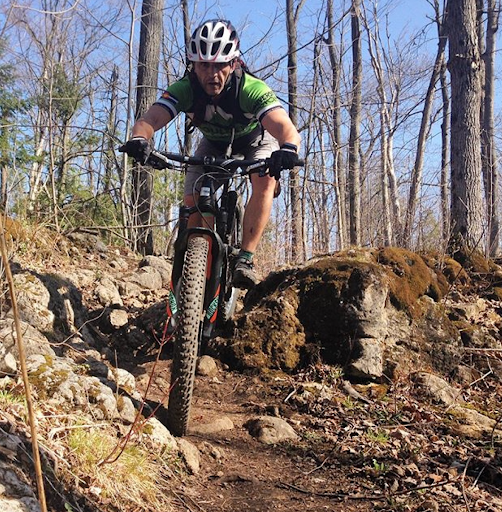
A few years ago, I signed up for the Hong Kong 100; a hundred kilometre ultramarathon through the mountains and trails surrounding the city.
I am not really built for distance running. I am stocky, more of a sprinter than marathoner, and not the kind of person anyone would look at and think, “yes, that man should run a hundred kilometres through mountainous terrain!”
What most people do not know is that I attempted it twice.
The first attempt ended in failure.
I was moving reasonably well through the early stages of the race when the weather turned without warning. A freak ice storm swept through the mountains, bringing with it conditions none of us had anticipated.
Looking back, however, the weather was not the real reason I stopped.
Somewhere in those conditions, I lost hope…and when my hope faded, belief quietly slipped away with it.
I dropped out at sixty-four kilometres and while it would be easy to blame the storm, the truth is that fear had taken control of my imagination. The weather conditions were deteriorating and my body was suffering, but the real issue was that I had allowed fear to convince me that those circumstances meant I could no longer continue.
My second attempt was different, and I sensed it before the race even started. My training was more thoughtful, my preparation was better, and my conviction had better grounding. But what I remember most is not the preparation; it is the collection of seemingly insignificant moments that occurred when my belief began to fade.
At one point I injured my knee and had decided that I would need to drop out at the next checkpoint. Then I received an unexpected text message from Kelly encouraging me onward. Later, an elderly woman I had never met offered to massage ointment on my knee. Then an Austrian couple generously shared supplements and energy drinks.
Near the final mountain pass, a thick fog settled over the trail and myself and a handful of runners naturally came together. Individually our lights revealed very little, but collectively they illuminated enough of the path for all of us to safely navigate a way forward.
Looking back, those moments felt like gifts. What fascinates me now is that none of them changed my circumstances much. The mountain was still there. My knee still hurt. The distance remaining had not changed.
What changed was my belief.
And sometimes that is all that is required.
Each small act helped keep my hope alive, and with it my belief
Twenty-one and a half hours later, I crossed the finish line. Not because I was the obvious candidate to succeed, and not because the second race was easier. I finished because I had learned something from failing the first time that I could not have learned any other way.
Belief is not something that arrives before we begin.
More often than not, hope gives us the courage to take the next step, and belief grows as we discover we can.
The Four-Minute Lie
There is another running story that illustrates this principle even more clearly.
For decades, the athletic world believed that running a mile in under four minutes was physically impossible. Coaches believed it. Doctors believed it. Athletes believed it. The limitation became so accepted that very few people seriously challenged it.
Then, on May 6, 1954, Roger Bannister ran a mile in three minutes and fifty-nine seconds.
What happened next is what makes the story remarkable. Within a relatively short period of time, several runners began doing the same thing.
Human biology had not changed but belief had.
Once one person demonstrated that the ceiling was not a law of nature but simply a limitation in the collective imagination, everything shifted. What had seemed impossible suddenly became achievable; not because the runners were different, but because the story they believed about what was possible had changed.
I think this reveals something profound about hope. It does not merely change what one person accomplishes; it changes what everyone who witnesses it believes they are allowed to attempt.
The rocket launch at Cape Canaveral. Roger Bannister breaking four minutes. My own experience on a mountain trail in Hong Kong - all of them point to the same truth.
The greatest obstacle is often not the challenge itself, it is the story fear is telling us about the challenge that if we listen to it will in turn become a limiting belief.
The ice storm was real. The injured knee was real. The fatigue was real. But the greatest threat was the voice telling me what those circumstances meant. And on my first attempt, I listened but on my second attempt, despite the evidence in front of me, I chose to believe a different story.
What Belief Actually Is
We often think of belief as a personality trait; something certain people naturally possess while others do not but I do not think that is true.
Belief is a decision.
It is the choice to let hope occupy more of our imagination than fear does, and to then back that choice with action before the outcome is guaranteed.
I wish I could tell you that fear eventually goes away but in my experience, it doesn’t.
The goal is not to eliminate fear. Fear is a natural part of the human experience, however the goal is to stop allowing it to become the dominant voice in our lives.
Fear will always have something to say, but the question is whether we hand it the pen. When we do, it begins writing stories about what is possible and what is not. It becomes the reason we avoid the difficult conversation, postpone the business idea, neglect the relationship that needs attention, or convince ourselves that we will pursue the dream once the conditions are finally right.
Many of us are grounded from finding our better future because we are waiting for certainty. We want guarantees before we act. We want confidence before we begin.
Looking back on my own life, very few meaningful chapters began with certainty. Most began with a nudge, a conversation, an opportunity, or a quiet conviction that there might be something more on the other side of the discomfort.
But certainty is rarely granted in advance; it tends to arrive after we have already started moving.
In the words of Rumi:
“As you start to walk on the way, the way appears.”
The question is not whether we will face fear; the question is whether we are willing to feel the fear and choose hope anyway. Are we willing to hold onto a bold vision of what could be despite resistance, doubt, and uncertainty.
The better path always starts with hope; and then requires the courage to take the necessary steps that in turn allow our belief to grow stronger.
So this week, stop reflect and ask:
What is the one risk you have been avoiding that hope is quietly asking you to take?
Where has fear been writing the story of your future and what story would hope tell instead?
What would you attempt if you genuinely believed you could not fail?
If this landed for you, pass it along to one person who might need to read it today.
If someone shared this with you and you'd like to receive it directly, subscribe here.
New here?
Discover Where You're Thriving and Ready to Grow

Subscribe to Full Spectrum Newsletter
Get insights delivered to your inbox monthly.
Subscribe to Full Spectrum Newsletter
Get insights delivered to your inbox monthly.